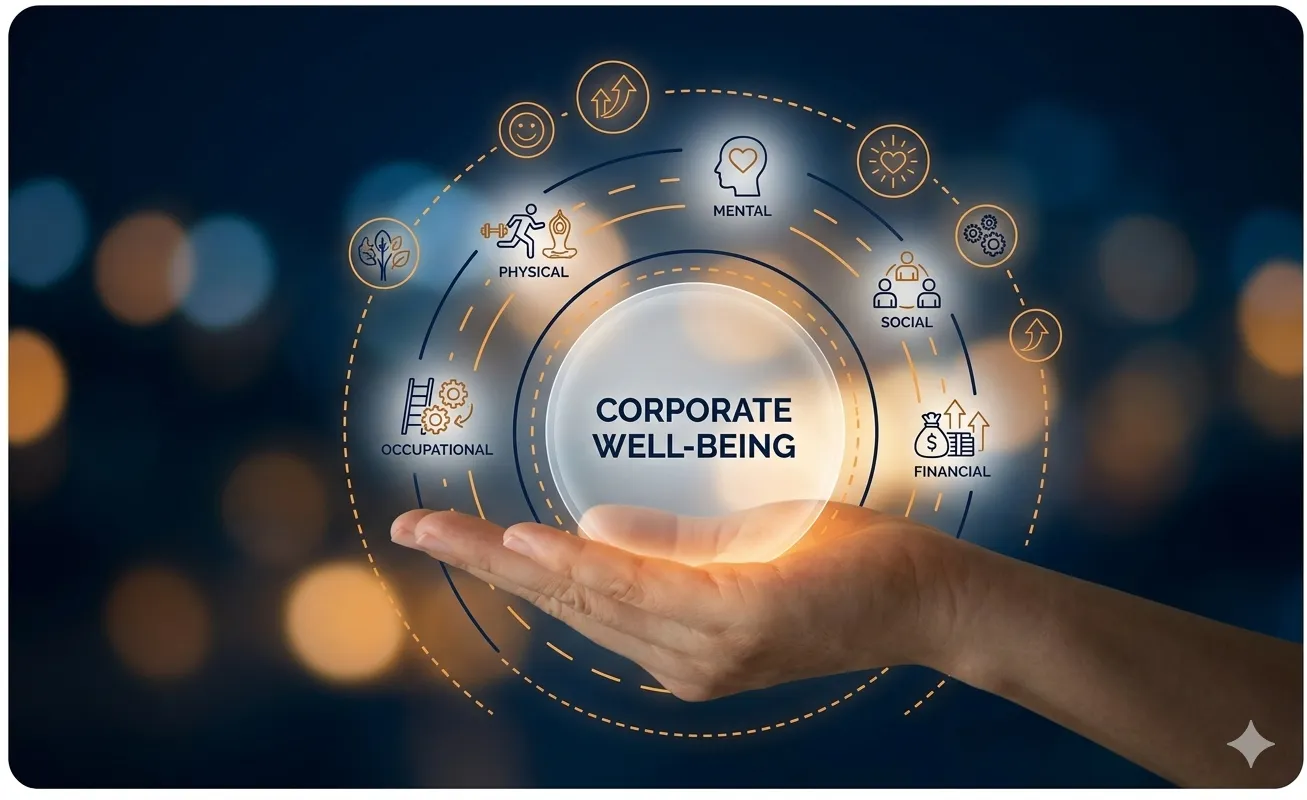
Corporate well-being programs
You are spending on wellness but you cannot prove it is working
Most corporate wellness programs have an engagement problem and a measurement problem. Fewer than a third of employees actively participate, and the C-suite wants ROI numbers that your current tools cannot produce. AI can fix both.
The problem
Where corporate wellness programs fall short
Only 32% of employees actively engage in wellness programs
Industry data from Wellable and RAND shows that while 68% of employees have used a workplace wellness offering at least once, only 32% participate regularly. The rest sign up, try one activity, and drift away. Programs designed for the average employee end up reaching almost no one consistently.
95% of companies that measure wellness ROI see positive returns, but most never measure
A 2024 Wellhub study found that 95% of employers tracking wellness ROI reported positive returns, up from 90% in 2023. The problem is that most organizations lack the data infrastructure to connect program spend to health outcomes, productivity, or retention. Without measurement, the budget is always at risk.
Companies with strong wellness programs see 9% attrition vs. 15% without
Research from Wellable shows that organizations with effective wellness programs experience voluntary turnover of 9%, compared to 15% at companies with weaker offerings. That six-point gap, applied to a workforce of 1,000 employees, represents dozens of avoided replacement costs per year.
93% of employees now rank wellbeing support as important as salary
A 2024 survey found that 93% of workers consider employer wellbeing support as important as their compensation. Among Gen Z, 91% call wellness programs non-negotiable in a job search. The expectations are clear; the question is whether your current program meets them.
Where AI helps
Practical AI applications for the problems above
Personalize programs so employees actually use them
AI analyzes employee demographics, participation history, and stated preferences to recommend specific wellness activities to each person. Instead of blasting the same newsletter to 5,000 employees, the system delivers targeted suggestions that match individual needs. Companies using AI-driven personalization report 27% higher participation rates.
Build the ROI dashboard your C-suite is asking for
AI aggregates data across your wellness vendors, benefits claims, absenteeism records, and engagement surveys into a single view. You see which programs drive participation, which reduce healthcare costs, and which produce no measurable outcome. That turns a budget defense into a data-backed business case.
Predict who is disengaging before they stop showing up
AI models identify participation drop-off patterns weeks before an employee fully disengages. Automated, personalized re-engagement messages reach at-risk participants at the right moment with the right offer. Catching disengagement early keeps your active participation numbers from quietly eroding quarter over quarter.
Track vendor performance without the spreadsheet work
AI consolidates utilization data, satisfaction scores, and cost-per-participant metrics across all your wellness vendors into automated reports. You see which vendors deliver results and which underperform, without manually pulling data from six different platforms every month.
Turn employee feedback into action
Natural language AI analyzes open-ended survey responses, pulse check comments, and program feedback at scale. Instead of reading thousands of comments or relying on keyword counts, you get structured themes, sentiment trends, and specific recommendations ranked by frequency and urgency.
Reduce administrative load on your wellness team
AI automates program enrollment, event scheduling, eligibility verification, and vendor coordination. Tasks that currently take your team hours each week run in the background. That frees your wellness managers to focus on strategy and employee relationships instead of logistics.
Why LightSource
We speak both wellness and boardroom
LightSource Advisors works exclusively with healthcare and wellness organizations. We understand the wellness space and the corporate buyer's need for measurable outcomes. We are vendor-neutral, so we evaluate your current program and vendors against performance data, not referral agreements. Every recommendation comes with the executive-ready reporting framework your leadership team needs to see.
How it works
Three steps from assessment to results
Step 1
Assess
We audit your current wellness programs, vendor ecosystem, engagement data, and reporting gaps to identify where AI delivers measurable improvement in participation and ROI visibility.
Step 2
Plan
You receive a prioritized roadmap with specific tools, expected outcomes, and an implementation timeline designed to fit your vendor contracts, budget cycle, and team capacity.
Step 3
Build and stay
We implement alongside your team, connect your data sources, and remain engaged until the dashboards and automation are producing the results we projected.
Ready to act
Find out where AI fits in your wellness program
The AI Readiness Assessment gives you a scored roadmap of your highest-impact opportunities. No pitch, no pressure. Just a clear picture of what is worth doing first.
Start a conversationSources
- Wellable. "120 Employee Wellness Statistics for 2025." 2025. Cites 32% active engagement rate, 9% vs. 15% voluntary attrition comparison, and 27% participation lift from AI-driven personalization. wellable.co
- Wellhub (formerly Gympass). "Study Reveals Strong Return on Investment for Corporate Wellness Programs." 2024. Cites 95% of companies measuring ROI reporting positive returns, up from 90% in 2023, with nearly two-thirds seeing at least $2 back for every $1 invested. wellhub.com
- Workhuman. "20 Impactful Workplace Wellness Statistics in 2025." 2025. Cites 93% of employees ranking wellbeing support as important as salary. workhuman.com
- WifiTalents. "Corporate Wellness Program Statistics: Reports 2025." 2025. Cites 91% of Gen Z employees considering wellness programs non-negotiable, 68% overall usage rate, and RAND data on 20-40% participation range. wifitalents.com
- Macorva. "Evaluating ROI for Employee Wellness Programs: Updated Insights for 2025." 2025. Cites $3.27 medical cost reduction and $2.73 absenteeism cost reduction per dollar spent on wellness programs. macorva.com
Statistics cited from original sources. Dates reflect the most recent available data at time of publication.
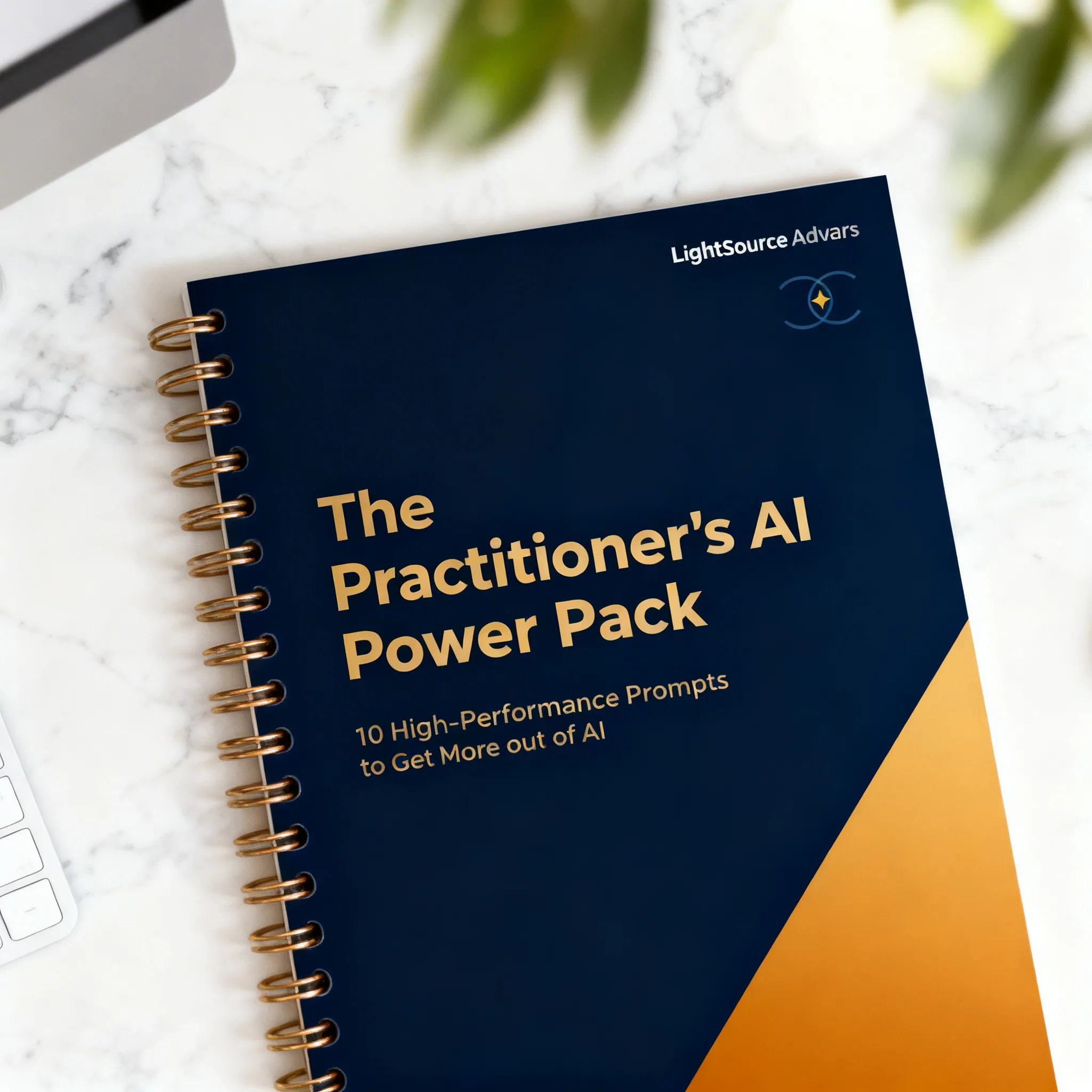
Download the Practitioner's AI Power Pack
9 hours of Google's prompt engineering course, distilled into 10 templates built for healthcare and wellness. Revenue Protection, Marketing and Growth, Operational Efficiency, Strategy and Training.