
Healthcare and wellness entrepreneurs
You are building a healthcare company with a team that is too small for the work ahead
Healthcare entrepreneurs face a specific version of a common problem: too many jobs for too few people, in an industry where the margin for error is smaller and the sales cycle is longer than anywhere else. AI can take on the operational and analytical work that would otherwise require hires you cannot yet afford.
The problem
Where healthcare startups lose time, money, and momentum
90% of healthcare startups fail within three years
Data compiled by SPDLoad and MagmaLabs shows that 90% of healthcare startups do not survive past year three. Regulatory complexity, lengthy sales cycles, and the cost of clinical validation make healthcare one of the hardest sectors to build in. The companies that survive are the ones that find operational efficiency early.
Founders spend 36% of their work week on administrative tasks
A Time Etc survey of entrepreneurs found that founders spend more than a third of their work week on tasks like data entry, scheduling, invoicing, and document formatting. For a healthcare founder averaging 45.5 hours per week, that is over 16 hours spent on work that does not build the product or close a customer.
Hiring consumes 18.8% of total startup costs
Embroker reports that hiring and payroll account for nearly one in five dollars a startup spends. Average payroll for a five-person team runs $300,500 per year. For a healthcare startup with limited runway, every premature hire accelerates the clock toward a funding gap. Every bad hire accelerates it faster.
70% of healthcare buying cycles now exceed 13 months
Research from Founders Forum Group and healthcare sales cycle data shows that 70% of healthcare organizations take more than 13 months to make a purchasing decision, with half exceeding two years. For a startup burning cash, a two-year sales cycle means you need operational efficiency that keeps the lights on while you wait for the deal to close.
Where AI helps
Practical AI applications for the problems above
Do market research without hiring an analyst
AI research tools can analyze competitor positioning, pricing models, market size data, and customer sentiment across public sources in hours instead of weeks. You get structured competitive intelligence that would normally require a dedicated analyst or an expensive consulting engagement. For a founder validating product-market fit on a limited budget, that speed matters.
Automate the admin work that eats your week
AI workflow tools handle scheduling, data entry, document formatting, email triage, and reporting automatically. If you reclaim even half of the 16 hours per week that founders currently lose to admin, that's the equivalent of two extra workdays to spend on product, sales, or fundraising.
Build your marketing engine before you can afford a team
AI content tools generate blog posts, email sequences, social media copy, and sales collateral from your positioning and domain expertise. You maintain a consistent market presence without hiring a content team. When you are ready to hire, the AI-generated body of work gives a new marketing lead something to build on instead of starting from zero.
Analyze your data without a data team
AI analytics tools process customer feedback, usage data, survey responses, and operational metrics and surface patterns a founder would need a data analyst to find. You make decisions backed by data instead of intuition, without adding headcount. For an early-stage company, that means better decisions at lower cost.
Onboard customers without manual effort
AI communication tools send personalized onboarding sequences, answer common questions, and route complex issues to the right person automatically. Your first 50 customers get a consistent, professional experience even when your team is three people. That first impression sets the tone for retention and referrals.
Design processes that scale before you need them to
AI process design tools help you document, standardize, and automate workflows while your team is still small. When you hire employee six or sixteen, they inherit systems that work instead of tribal knowledge that lives in the founder's head. Building scalable operations early is one of the strongest signals investors look for.
Why LightSource
We move at startup speed with 30 years of healthcare experience
LightSource Advisors is not a big consultancy that will over-scope and under-deliver. We work at your pace, within your budget, and with the urgency that early-stage companies require. We bring 30 years of healthcare strategy experience to help you avoid the expensive mistakes that sink startups before they find traction. We are vendor-neutral, so every recommendation is based on what works for your stage and your market.
How it works
Three steps from assessment to results
Step 1
Assess
We map your current workflows, team capacity, and growth bottlenecks to identify where AI can replace manual work and accelerate your path to market without adding headcount.
Step 2
Plan
You receive a prioritized roadmap with specific tools, expected time and cost savings, and an implementation sequence designed for a lean team and limited budget.
Step 3
Build and stay
We implement alongside your team, configure each tool for your use case, and remain available as your operations scale and your AI needs evolve.
Ready to act
Find out where AI fits in your startup
The AI Readiness Assessment gives you a scored roadmap of your highest-impact opportunities. No pitch, no pressure. Just a clear picture of what is worth doing first.
Start a conversationSources
- SPDLoad. "Startup Failure Rate Statistics by Industry and Stage (2025)." 2025. Cites 90% healthcare startup failure rate within three years and healthcare-specific challenges including regulatory complexity and lengthy sales cycles. spdload.com
- Time Etc. "The Big Price Of Small Tasks: How Entrepreneurs May Be Unwittingly Keeping Their Businesses Small." 2024. Reports founders spending 36% of their work week on administrative tasks, averaging 45.5-hour work weeks. timeetc.com
- Embroker. "110 Must-Know Startup Statistics for 2025." 2025. Cites hiring consuming 18.8% of total startup costs and average payroll of $300,500 for a five-person team. embroker.com
- Founders Forum Group. "The Ultimate Startup Guide With Statistics (2024–2025)." 2025. Reports 70% of healthcare buying cycles exceeding 13 months and half exceeding two years. ff.co
- MagmaLabs. "Why Most HealthTech Startups Fail in 2025." April 2025. Reports 80% failure rate for healthcare startups and 10–11 year timeline to reach $100M ARR in healthtech. magmalabs.io
Statistics cited from original sources. Dates reflect the most recent available data at time of publication.
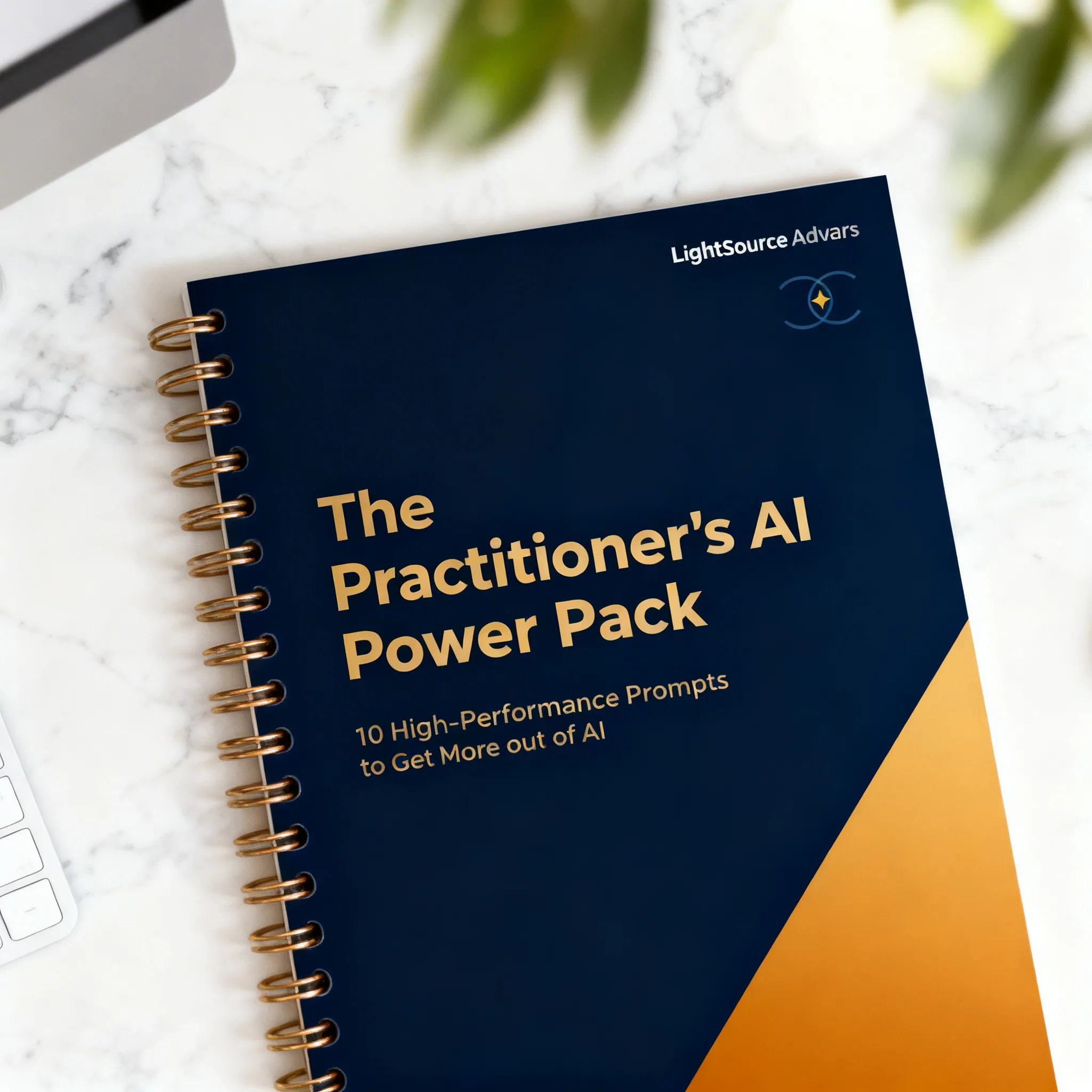
Download the Practitioner's AI Power Pack
9 hours of Google's prompt engineering course, distilled into 10 templates built for healthcare and wellness. Revenue Protection, Marketing and Growth, Operational Efficiency, Strategy and Training.